Why Do I Feel Worse After Certain Conversations — Even When Nothing Happened?
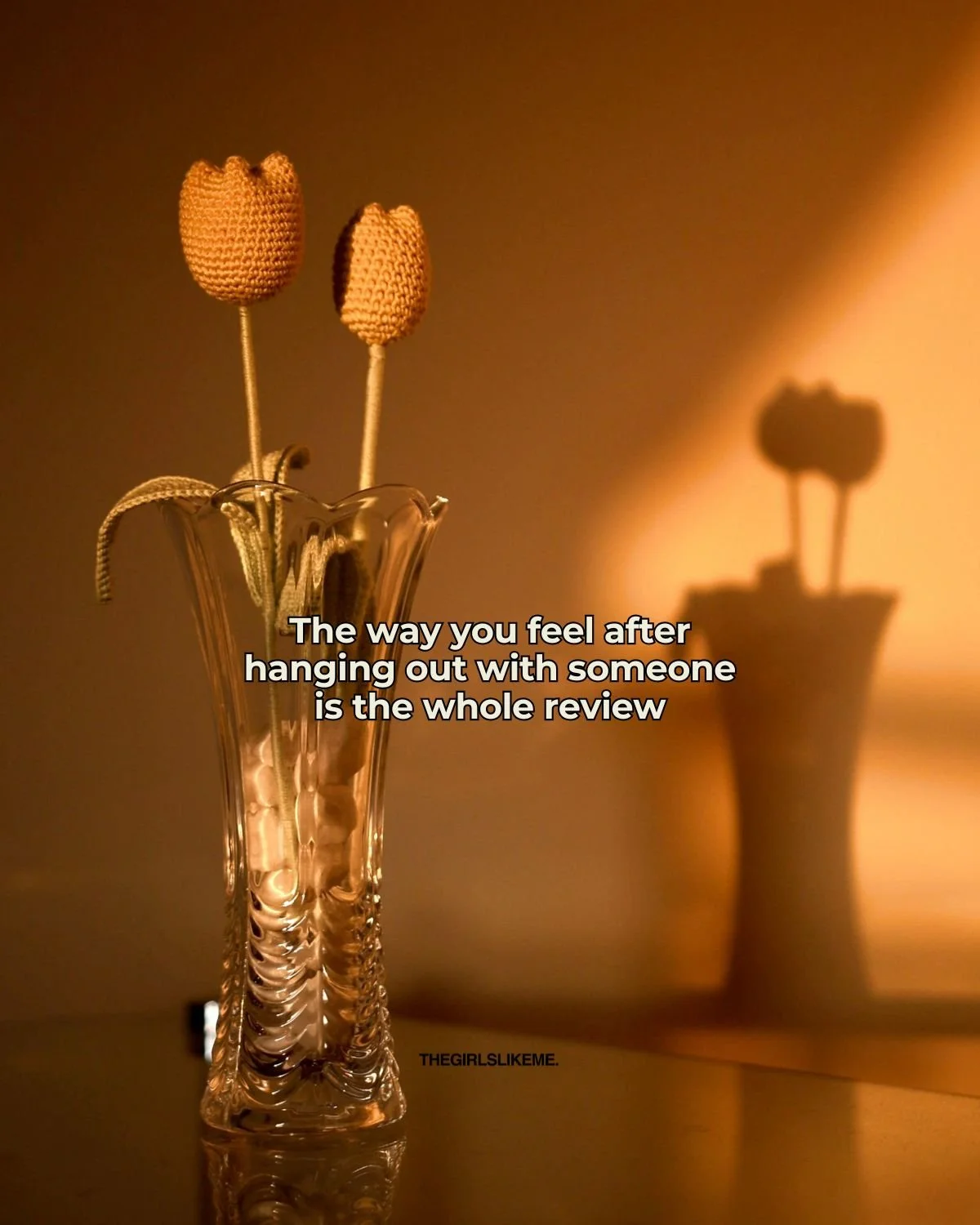
Real quick, before we get into it, can you think about the last person you spent time with who left you feeling completely like yourself? Now think about the person who does the opposite. I’m sure you probably didn’t even have to think that hard…
There are people you can spend three hours with and leave feeling lighter, sharper, more like yourself.
And then there are those people who somehow leave you feeling:
Vaguely embarrassed for no clear reason
Emotionally disorganized
Defensive over things you can’t quite name
Like you need to replay the entire conversation in the shower later
Nothing “bad” actually needs to happen to feel this way after hanging with these people. I mean, there is no screaming. No obvious disrespect. No dramatic betrayal.
But for whatever reason, your nervous system feels something and quietly leaves the function before your body does.
I think a lot of emotionally perceptive women know this feeling intimately. The problem is that most of us were never taught how to identify subtle emotional dynamics unless they became undeniably toxic. So, we dismiss ourselves and we say things like: “Maybe I’m overthinking” or “Maybe they didn’t mean it like that” and my favorite “Maybe I’m just too sensitive”
And all the while, your body is doing its best to submit a formal incident report.
Sometimes “Weird” Is Information
Feeling weird after your interaction with someone is not nothing. Weird is your first draft of the truth, before you talked yourself out of it.
Remember that your nervous system is not dramatic. It doesn’t manufacture discomfort for fun. So when something feels off after an interaction, that feeling is your pattern recognition working, quietly cataloguing tone shifts, energy withdrawals, and moments where the room tilted slightly in a direction you didn’t choose.
Weird is just what we call it before we have better words.
Why You Feel Drained After Conversations
Your nervous system is keeping score even when you aren’t.
That’s why certain interactions linger long after they’re over. You leave brunch and suddenly feel insecure about things you were perfectly fine with two hours ago. You share good news and somehow end up feeling like you need to downplay it. You open a text and immediately feel tension in your chest — despite the message technically sounding “normal”.
Nothing you could point to. Everything you can feel.
A lot of emotional dynamics work this way — through implication, tone, timing, energy shifts, strategic distance, subtle dismissals. Not dramatic moments but small ones repeated consistently until your body starts bracing before your brain even knows why.
And most of us were taught to override that signal entirely. To be polite. To be fair. To give the benefit of the doubt so many times that we stopped having any doubt left to give.
Common Emotional Dynamics That Are Hard to Name
When you can feel the pattern but you don’t have words for it, it can keep you stuck. Without language, we can’t make clear decisions and this keeps us negotiating with our own intuition.
Here are a few dynamics that are more common than most people admit:
Soft competition — When someone in your life consistently reframes your wins as a comparison opportunity. You got a promotion; they mention their salary. You’re excited about a trip; they describe a better one. There’s no direct put-down, just a persistent redirection of attention.
Performative support — Showing up for the parts of your life that are publicly visible while being strangely unavailable for the parts that actually cost something. Present for the celebration. Absent for the crisis.
Selective availability — Someone who is warm and engaged when they need something from you, and vague or slow-to-respond when you need something from them. Not ghosting. Not absence. Just a very calculated distance.
Emotional labor imbalance — You manage their feelings. They do not manage yours. You track their moods, soften your delivery, and edit yourself constantly. They do not return the consideration. Over time, this gap becomes the texture of the entire relationship.
Access without accountability — They have consistent access to your time, energy, and emotional investment but have never taken responsibility for the ways they’ve impacted you. You remain available; the dynamic never gets addressed.
None of these are dramatic. All of them are exhausting.
Why You Keep Dismissing Yourself (And How to Stop)
The reason emotionally intelligent people often stay in confusing dynamics the longest is precisely because of their emotional intelligence. They’re good at understanding other people’s perspectives. They can always find a generous explanation. They’re practiced at patience.
Which means their threshold for naming something as a problem is higher than it should be.
If this is you, here’s the recalibration:
Confusion is data
Tension is data
Recurring emotional exhaustion is data
You do not have to build a court case before you’re allowed to trust your own experience. Sometimes the issue isn’t that you’re “too sensitive”. Sometimes your emotional pattern recognition is functioning perfectly.
How to Stop Feeling Bad After Talking to Certain People
The most powerful thing you can do is name the pattern. Not to build a case. Not to label anyone a villain. You stop negotiating with your own intuition once you can call it (whatever strange feeling you are having) by its name.
Language creates clarity. Clarity creates choice. Choice creates agency.
That sequence — from vague discomfort to clear decision — is entirely dependent on having the right words.
Once you can say “ oh this is soft competition” or “this is definitely access without accountability”, you stop spending energy trying to figure out if something happened. You already know what happened. Now you can decide what to do about it.
Frequently Asked Questions
Is it normal to feel anxious or off after seeing a friend? Yes — and it’s more common than most people discuss. Emotional discomfort after a social interaction is often your nervous system flagging a pattern it’s recognized before. It doesn’t automatically mean the relationship is toxic, but it does mean the dynamic is worth examining.
Why do I feel bad about myself after talking to certain people? This is usually a sign that something in the interaction subtly diminished you — a comparison, a dismissal, a reframe. It’s not always intentional. But impact is real regardless of intent.
What is emotional labor in a friendship? Emotional labor in a friendship looks like consistently managing how the other person feels — softening your words, tracking their moods, prioritizing their comfort — without that consideration being returned. Over time, this creates a significant imbalance that manifests as exhaustion and low-grade resentment.
How do I know if someone is subtly manipulative? You usually feel it before you can explain it. Signs include: consistently leaving conversations feeling worse than you arrived; feeling responsible for their emotions without being asked; feeling like you can’t share good news without it being complicated; and noticing that the relationship only works smoothly when you’re accommodating.
What should I do if I recognize these dynamics in a relationship? Naming it is the first step. Once you have language for what’s happening, you can make a considered decision — whether that’s a direct conversation, redefining the relationship, or quietly adjusting your investment. What you stop doing is dismissing yourself.
In Conclusion…
Sometimes the most validating thing in the world is realizing: “Oh my God. That’s exactly what this is!”
Which is why we created Is There A Word For This?
We wanted language for the strange emotional dynamics women experience constantly but struggle to explain clearly.
Not clinical therapy language. Not vague “protect your peace” advice.
Actual words for:
Selective availability
Soft competition
Performative support
Delayed boundaries
Emotional labor imbalance
Access without accountability
Because once you can identify a dynamic clearly, you can finally decide what to do with it intentionally — instead of sitting in emotional fog trying to convince yourself nothing happened. Which, unfortunately, many of us have a PhD in.
[Get Is There A Word For This? →] A digital reference guide to the emotional dynamics women experience but rarely have words for.